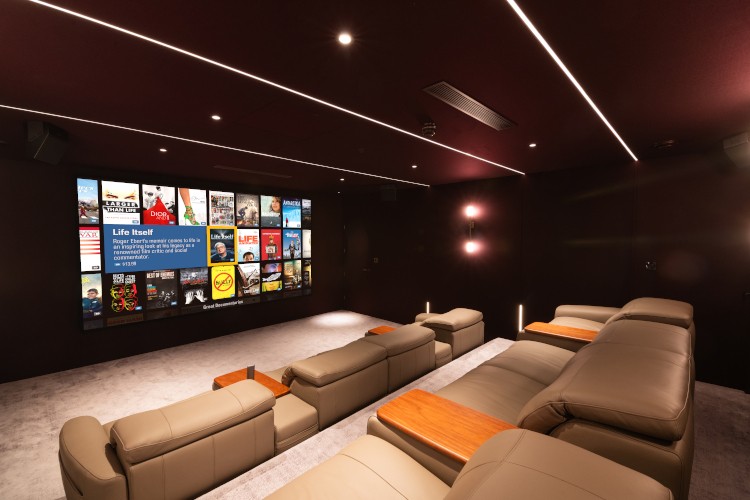
Owen Maddock, owner and designer at CEDIA award-winning member Cinemaworks, shares his thoughts
What should interior designers think about when a client wants a dedicated home cinema room? The best rooms get performance, comfort and atmosphere right from day one, so the finished space feels as considered as the rest of the home. Here are five tips that I share with the design teams I work with to help achieve the desired impact and aesthetic.
1. Start with performance, not decoration
The biggest decision in any home cinema is to treat it as a performance-led space from the start.
Technical design comes first: screen size, sight lines, seating positions, speaker placement, room proportions. These decide how the room actually feels to use. Styling comes after.
This isn’t guesswork. CEDIA, the trade body for smart home professionals who usually deliver these rooms, puts real weight on measurable performance and early collaboration with design teams. Room layout, acoustics and viewing conditions need to be agreed long before anyone picks a finish.
The 2025 CEDIA Smart Home Award EMEA winners show what this looks like in practice. My Beside the Seaside project won Best Home Cinema Level I. Die Zwei – Heimkino GmbH’s Flotopia won Best Home Cinema Level III. Both were built around careful room reconfiguration to generate far stronger performance.
2. Be bold with styling but protect the viewing experience
A good cinema room doesn’t need red velvet, glowing starscapes and heavy theatrical detail.
There’s plenty of room for contemporary, characterful interiors. The trick is knowing where visual drama helps and where it gets in the way. Keep anything reflective or busy away from the screen. Statement lighting, bars, shelving and decorative finishes work best out of the main sight line.
Keep the front of the room calm. Let more personality in as you move to the back. That gives designers room to make the space feel bespoke and luxurious without breaking the immersive experience clients are paying for.
The 2025 CEDIA Smart Home Awards EMEA judges rewarded exactly this balance in projects like Buzzards Road Home Cinema by IndigoZest and Cinema Luxe, which won Best Home Cinema Level II and Technology Meets Design.
3. Allow more space than the floor plan suggests
One of the most common mistakes in cinema design is treating the visible floor plan as the usable floor plan. High-performing rooms almost always need more depth and width than may first appear necessary. Visible walls can sit anywhere from 150mm to 1000mm in front of the structural walls, depending on the performance level of the cinema, because that space hides speakers, subwoofers and acoustic treatment. On lower-performance systems 150mm can work, but on higher-performance systems, we build further forward still to allow deeper subs, deeper speakers and deeper treatments.
Sound isolation matters too, and how far you go depends on the wider home. Where does the cinema sit? Who’s nearby? If there are young children sleeping close by, or the property sits near a flightpath or railway line, the acoustic strategy has to work both ways. Layered, dense boards and air gaps are usually the best tools. A very quiet room matters as much as a well-contained one. When background noise is low, the room feels still and viewers pick up the smallest details in the quietest moments of a film. That’s a big part of what makes a room feel immersive.
Projector placement is another place where hidden space pays off. Projectors are noisy because of their cooling fans, and they rarely look good mounted in the room itself. Above the seating, they can make people uneasy and dent the impact of walking into the room. Wherever possible, I use a separate projection cupboard, the way commercial cinemas do, so specialist low-loss optical glass (often double-glazed) blocks the fan noise. This matters even more as rooms get bigger and brighter, because bigger, brighter projectors are noisier too.
All this space adds up. That’s why I always tell architects and interior designers to bring in a CEDIA cinema specialist early at RIBA Stage 2. At that point, the space can still be shaped around the experience the client wants, rather than performance having to fit around decisions that are already locked in.
Award-winning projects make the same point. The CEDIA Award-winning Flotopia project expanded into an adjacent room and dug down at the front for extra height, showing what’s possible when performance drives the design from early on.
4. Treat seating as part of the engineering
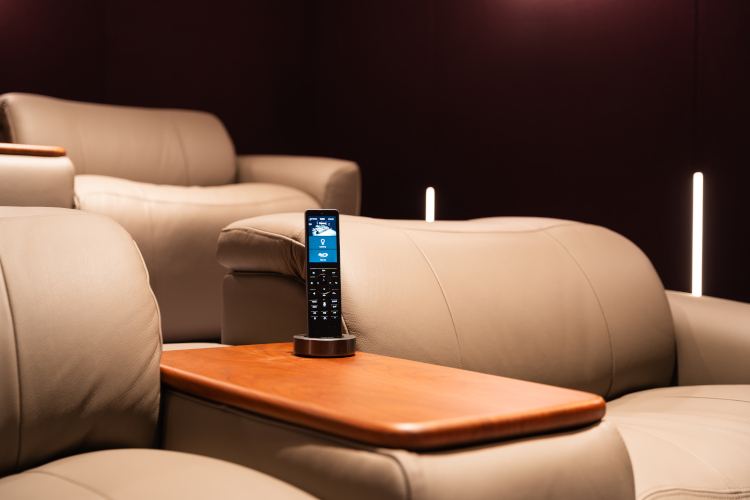
Seating affects comfort and performance in equal measure. It’s tempting to think about looks and headcount first, but where seats sit and how they’re shaped changes sight lines, sound quality, and how evenly the experience lands across the room. I’m wary of seats against walls, or walkways cutting through the middle of the listening area. Both can weaken performance exactly where it matters most.
So, think beyond the standard cinema recliner. Softer, more residential seating often suits a contemporary home better, and can even improve the sound by cutting down on bulky headrests and awkward spacing. The goal is seating that looks inviting and feels luxurious, while still giving every guest the best sound and sight lines on offer.
5. Use lighting and colour to build atmosphere without distraction
Lighting does more than any other element to give a cinema room its identity. Good lighting design makes the room feel dramatic on entry, practical when you need it, and unobtrusive once the film starts. You need several controllable scenes: low guidance lighting, softly lit rear zones, and something more decorative for social moments.
Colour works the same way. A commercial cinema goes dark throughout. Most clients want something warmer. My advice: keep the screen end dark enough to protect picture contrast, then bring in richer or lighter tones as you move away from the screen.
Deep blues, plum reds and soft greys all work well when used with care. The result is a room that feels designed, not just blacked out, but still performs like a cinema once the film starts. The CEDIA Award winner, Buzzards Road Home Cinema, combined linear LEDs, bespoke bronze wall fixtures and a fibre-optic star ceiling for atmosphere without touching the viewing experience. Our Beside the Seaside scheme used layered lighting scenes to draw viewers into the room, then fade gently as the film begins.
The best home cinemas happen when architects, interior designers and home technology professionals work together early and openly. The technology is complex. For the client, it shouldn’t feel that way: a room that looks exceptional, works without thinking, and disappears the moment the story begins.
To find out more about the CEDIA Smart Home Awards, take a look at the CEDIA Technology Meets Design publication
And to find out more about Cinemaworks, click here


