During Clerkenwell Design Week I was involved in a panel discussion on the future of wallcoverings. In this follow up feature interior designer Toni Black shares her views on how creative walls evoke a sense of atmosphere
What makes a wall actually speak to a guest? What’s the difference between a surface that communicates and one that simply fills space?
These are the questions I keep returning to, particularly when we’re working on a wallcovering scheme. And the more I think about surfaces, the clearer it becomes that the conversation around wallcovering has shifted considerably.
For a long time, surfaces were background decisions, resolved after the furniture, the lighting and the architecture. That’s changing, and some of the most compelling work I’m seeing, as a result of the creative collections that are launching, makes clear why. Walls are increasingly where the real design thinking lives.
What stayed with me most from Maison&Objet earlier this year was an atmosphere. The way the best installations and showrooms drew you in – materials and memory working together to shape how you experienced the space. That same quality – something quieter and more lasting, is what I find myself chasing in every wallcovering scheme.
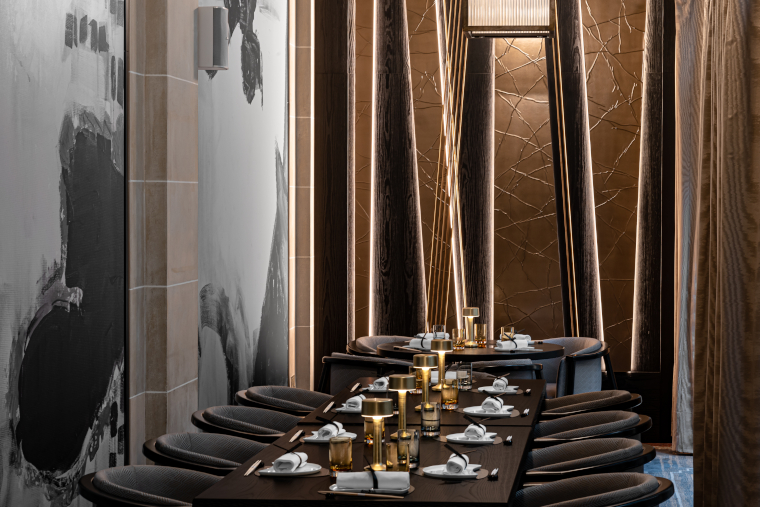
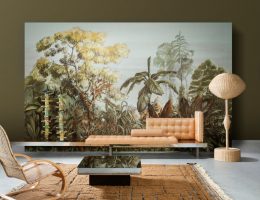
One of the most compelling shifts is what I’d describe as art moving outside the frame. The boundaries between surface and composition are dissolving. Hand-applied pigment treatments that respond to changing light. Large-scale painterly expressions that feel specific to the space they inhabit rather than transferable to any room. There’s a growing willingness to commit, to give a surface intentional authorship.
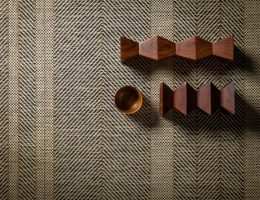
Materials are doing something equally interesting. The unconventional has become seriously compelling – compressed seagrass, panels woven from recycled textile offcuts, cork used in ways it simply hasn’t been before. What seems to unite the most successful choices is a kind of honesty, not novelty. They’re being straightforward about what they are, where they came from and how they were made. And that straightforwardness seems to resonate with guests and designers, increasingly in ways we’re only beginning to understand, in their acoustic quality, for example.
This connects to something I feel strongly about: the idea that the best materials carry a legible narrative about their origin. Provenance you can actually sense. A hand-woven linen panel produced using a regional technique tends to register differently to something manufactured at scale. There’s often a presence to it that speaks to the accumulated intelligence of how it was made. In hospitality design, I’d argue this matters enormously. Creating a space that could only exist where it does – that is pulled from the particular history of that building, that street, that place – benefits from materials that carry genuine narratives rather than purely aesthetic references.
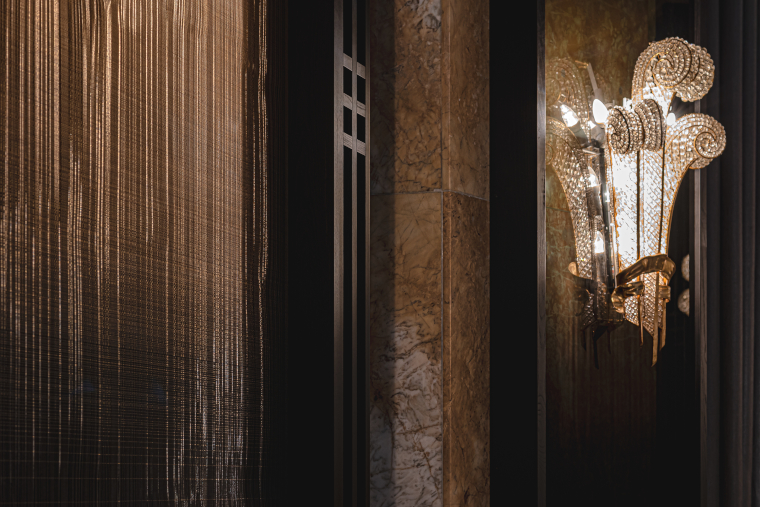
Under the theme ‘Past Reveals Future,’ that idea was everywhere at Maison & Objet this year. The past was being brought forward and reshaped by new processes and contemporary sensibilities. I saw that same intelligence in the wallcovering world in London Design Week and also Milan: archive patterns run through a modern eye, so you get the weight of heritage without the slightly costumed feeling that can tip a room into period drama. Hand-painted wallcovering, in particular, demonstrated why craft hasn’t been displaced by digital production, there is a quality of attention in hand-painted surfaces that’s difficult to achieve through digital means.
Pattern, too, is finding a new register. After several years of maximalism in much of the boutique hotel scene, what’s arriving now is more considered. Geometric precision with handmade irregularity. Botanical references that feel studied rather than decorative. The discipline to create complexity without visual noise. It’s a distinction that matters – the difference between a pattern that feels thoughtfully considered and one that simply fills the space.
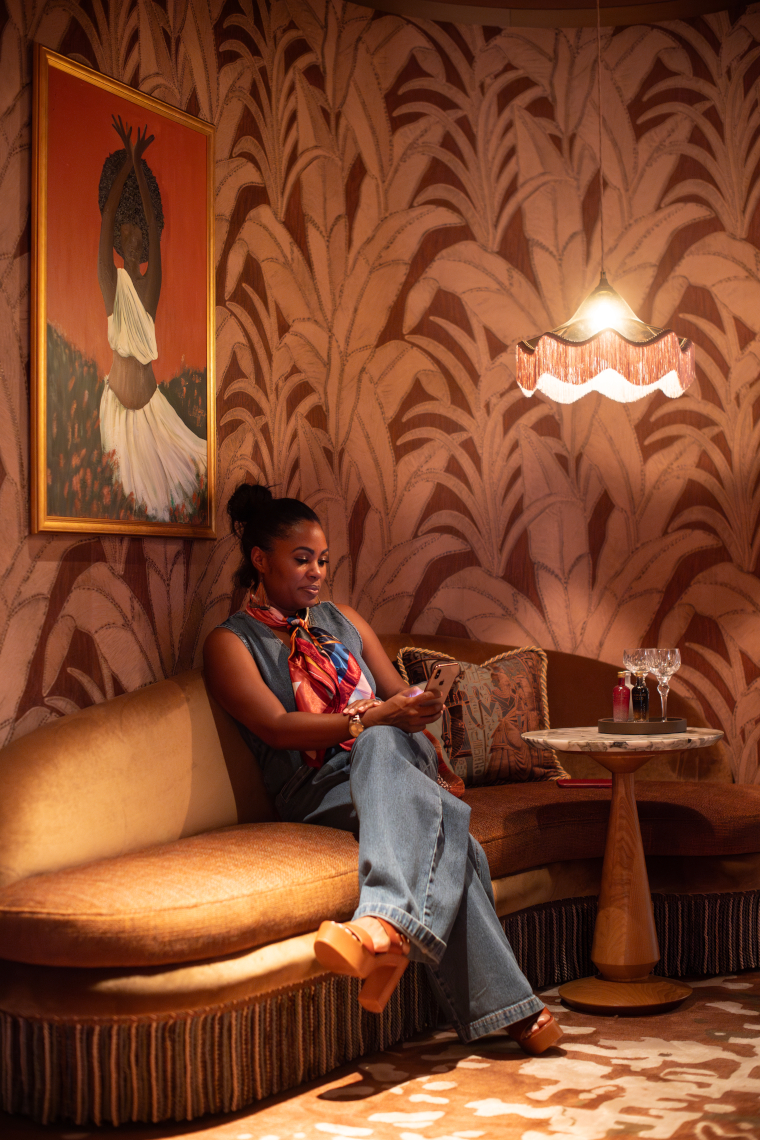
When wallcoverings work best, they’re part of a wider language – not making a statement on their own, but contributing to how the whole space communicates. In recent projects, including a Home Bar installation for WOW!house 2025, we’ve specified wallcoverings chosen for the way they echo hand-crafted techniques. They work alongside other elements, lowered ceilings, curved forms, materials that speak to nostalgia and legacy. The pattern has to feel like it belongs to the space – not imposed, but inevitable.
What connects all of it is a quality I keep returning to: surfaces that reward sustained attention. Walls that have been thoughtfully considered, with intentional narrative and real commitment to their purpose. In hospitality, we know that guests are perceptive in ways they often can’t articulate. They feel the nuances, whether a space feels authentic or curated, intentional or assembled. A wall that’s been genuinely thought through, with clear intention and a real story to tell, becomes one of the most powerful tools we have for shaping how guests experience a room.
What I keep returning to is that the most resonant walls are less about surface detail and more about substantive thinking. Less about decoration and more about genuine communication. That’s where the real work happens.
Toni Black is CEO of House of Black
(images show Toni Black in her room for WOW!house and Akira Black Prince de Galle Hotel Paris photo credit Patrick Locqueneux)