What WOW!house taught us about the future of luxury interiors, by Jeff Hayward
Beyond the striking schemes and headline-making rooms, WOW!house 2026 revealed something deeper about the future direction of luxury residential interiors: design and technology are becoming inseparable partners. This year’s record-breaking edition brimmed with bold, eye-catching statements and diverse, beautifully layered interiors, with each room offering its own distinctive vision for living and showcasing an extraordinary concentration of creative talent, craftsmanship and innovation under one roof.
For an interior design audience, the most interesting lesson was not that technology featured in more rooms than ever before, but that it was increasingly treated as part of the design process itself. Audio-visual technology lighting and intuitive control systems were not presented as separate technical add-ons. In the strongest spaces, they worked quietly within the fabric of the room, shaping how it functioned, flowed and felt while allowing the designer’s vision to remain firmly centre stage.
As Official Technology Partner for WOW!house 2026, CEDIA, the Association for Smart Home professionals™, helped bring this conversation into sharper focus by championing the partnerships between interior designers and its members. These collaborations showed how well-designed and thoughtfully installed technology can make a room feel more atmospheric, personal and intuitive, while protecting the visual language, materiality and intent of the interior.
Perhaps the most significant lesson from WOW!house was not about technology itself, but the process behind it. The strongest rooms emerged when the designers, lighting specialists, integrators and manufacturers collaborated from the earliest stages, allowing every layer of the experience to be considered as part of one unified vision rather than introduced later as separate disciplines. When this happens, technology does not need to announce itself. It can be carefully hidden, beautifully integrated or quietly orchestrated to support the story the designer wants the room to tell
Lighting is more than illumination
Lighting was one of the clearest examples of technology as a creative tool. Deployed by CEDIA members in multiple rooms, it did more than illuminate objects; it shaped experience. Layered scenes, dimming, colour temperature and intuitive controls helped spaces within WOW!house shift naturally from bright and practical to intimate, cinematic or restorative. The result was not simply better visibility, but a deeper sense of atmosphere and occasion.
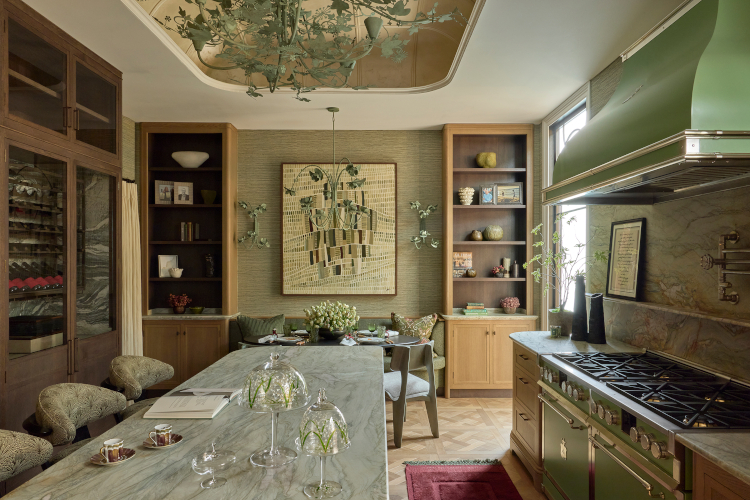
For Samantha Bartlett’s kitchen at WOW!house 2026, Homeplay collaborated closely with John Cullen Lighting to ensure the lighting design not only complemented the space aesthetically but actively shaped how visitors experienced it throughout the day. Dynamic, intelligent lighting created an environment capable of evolving from energising daylight scenes to warm, intimate evening settings. The system supported Samantha’s vision of a kitchen that felt genuinely lived-in and homely, demonstrating how intelligent lighting can reveal materials, artwork and finishes while quietly transforming mood and atmosphere. In this context, lighting became an integral part of the interior design story rather than simply a functional necessity.
Elsewhere, the Ca’ Pietra Bathroom by De Rosee Sa, working with Butler Harwell, used a 4k LED display for scene setting to mimic a coastal Mediterranean outlook supplemented by intuitive, while Custom Sight & Sound (CSS) collaborated with Elicyon on the Lalique Home Bar to show how elegant lighting can shape a controlled, immersive entertaining space. In the Shepel’ Library by Róisín Lafferty, CEDIA member LAV Projects offered another example of lighting supporting a layered, design-led experience. For WOW!house visitors, the message was clear: when planned from the start, lighting can add depth, subtlety and elegance to the experience of an interior
The soundscape is a living part of the interior
Sound provided by CEDIA members at WOW!house demonstrated how audio can influence a space, enhance its décor and adapt the room for different purposes. For interior designers, the opportunity is not simply to add music or conceal speakers. It is to think of sound as another sensory layer within the scheme, capable of changing the way a room is perceived, inhabited and remembered.
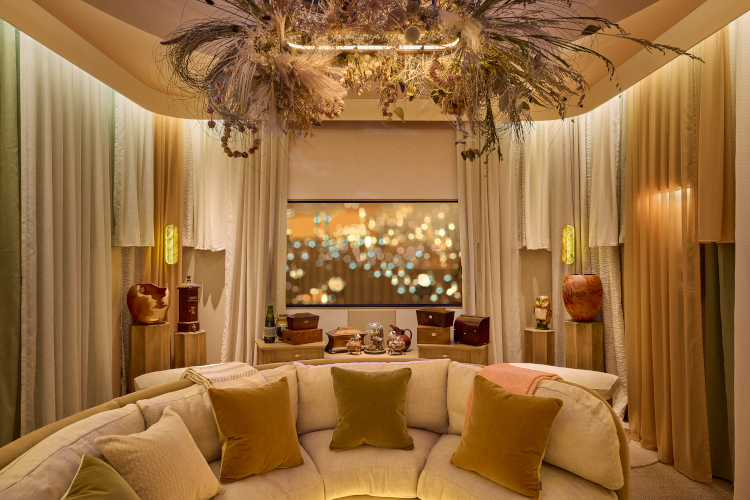
The Nucleus Immersive Room by Russell Sage Studio (pictured at top of page) was a prime example of audio being treated as an expressive material in the designer’s palette. Rather than simply filling the room with sound, the installation created a feeling of immersion, allowing audio to become part of the architecture of the space itself. Music, film soundtracks, ambient effects and spoken words could shift the mood of the room from intimate and calming to cinematic and deeply atmospheric. The focus was not loudness or technical performance, but emotional connection: visitors felt enveloped by the environment rather than positioned in front of it.
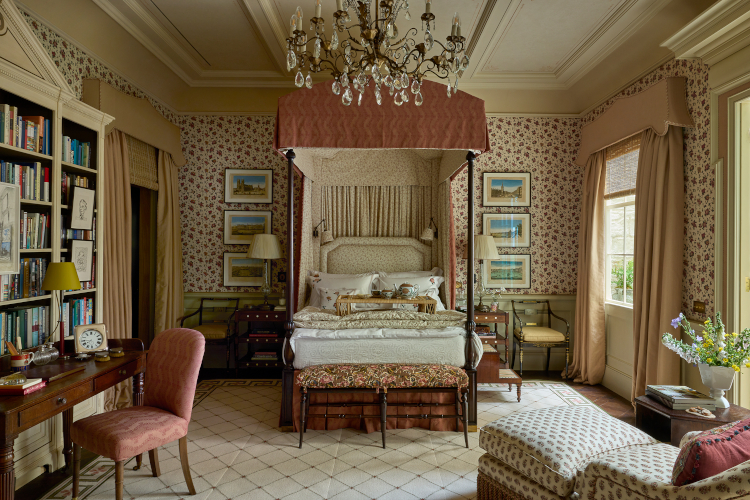
In the Salvesen Graham Primary Bedroom, CEDIA member Equippd provided a different kind of audio solution with miniature loudspeakers cleverly concealed within the spines of hardback books on the shelves. The speakers were colour-matched to the RAL palette of the book covers, with grilles either hand-painted or hydrodipped to imitate the covers themselves, allowing them to read as part of the library rather than as additions to it. It was a playful but highly considered detail that turned technology into a talking point, fully supportive of the room’s decor and character
Kitchens, bathrooms and transitional spaces are becoming smarter
WOW!house also challenged the idea that imaginative technology solutions belong only in home cinemas or living rooms. Some of the most interesting examples appeared in kitchens, bathrooms, powder rooms, bars and libraries, showing how technology can be used to enrich the everyday rituals of a home as much as its showpiece moments.
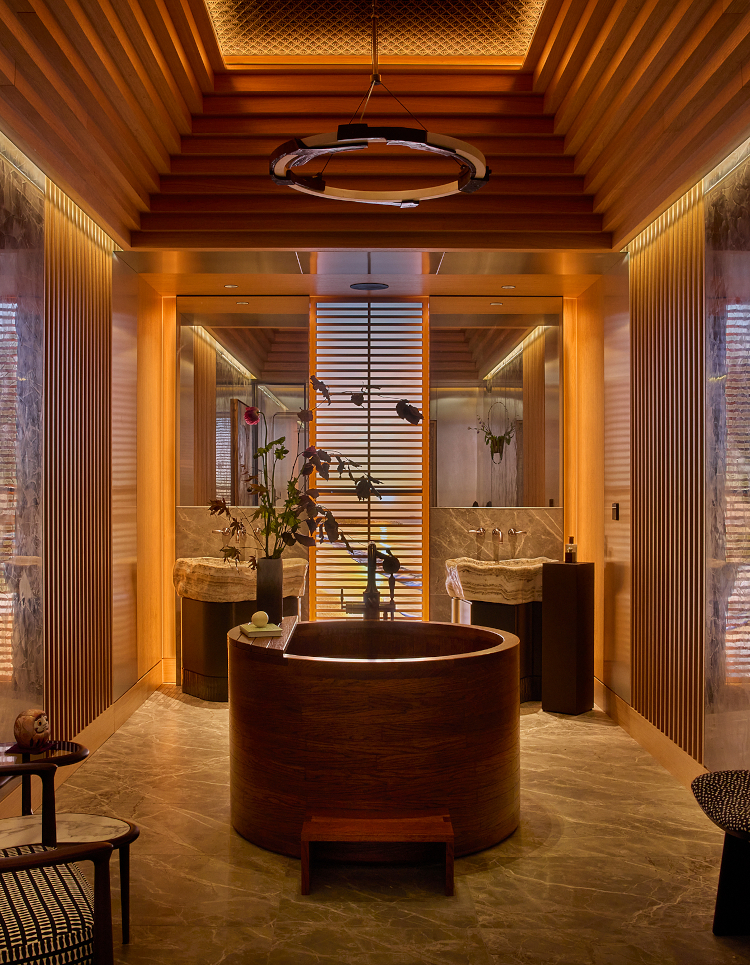
Working alongside Rigby & Rigby on the Samuel Heath Bathroom (pictured above), CEDIA member POWERPLANT Home Automation helped bring an ambitious design vision to life through the seamless integration of audio, video and lighting. Rather than being added as an afterthought, the technology became central to the experience, with mirror-like video displays transporting visitors to different locations around the world while a carefully programmed circadian lighting scheme evolved in sync with the content, shifting from cool snowy scenes to warm sunset tones. POWERPLANT worked closely with Rigby & Rigby to realise the vision of movement and light within the serene Japanese-themed bathroom, delivering a robust, fully automated system that ran continuously without intervention. The result was an immersive, sensory-led space that demonstrated how considered technology can shape atmosphere, emotion and a powerful sense of place.
This sense of place was also evident in the THG Paris Powder Room by Studio Mark Andrew, where an LED screen fitted by CEDIA member ih, Technology Simplified showed how a video-led experience can add drama and surprise in a compact setting. Together, these rooms made a clear point: the smartest homes are not centred around a single ‘tech room’, but shaped by discreet layers of convenience, comfort and control woven throughout the property. Kitchens can support versatility with music and task lighting; bathrooms can use light and sound to create a spa-like ritual; and powder rooms can use video to add a sense of theatre
Immersive does not have to mean overwhelming
A wider lesson from WOW!house was that immersive design does not need to be loud, obvious or overstated. Whether in a home bar, library, bedroom, bathroom or powder room, technology was at its best when it enhanced the feeling the designer wanted to create without dominating the space. That distinction matters for design-led audiences. When handled well, immersive sound, lighting scenes and automated control can make a room feel more natural, not less.
If WOW!house reveals what the most imaginative interiors can look like, this year it also demonstrated how they can feel. The technology was often discreet, but its influence was unmistakable. The most successful rooms did not simply showcase innovation; they showed what is possible when technology, lighting, craftsmanship and interior design work together seamlessly. As luxury homes become more responsive, personalised and experiential, this collaborative approach may define the next generation of interior design.